Key takeaways
- A San Francisco civic photographer documents public leadership like commissioners, appointees, ceremonies, hearings, and civic events, and the resulting images become part of the public record.
- Civic portraiture supports public trust because, for most residents, the photograph is the encounter with the official.
- Civic work differs from corporate work in audience (the public, not the client), in goal (documentation, not persuasion), and in obligation (institutional protocol and heightened permissions).
- Strong civic portraits favor presence over polish, clarity over drama, and dignity without distance — and gain power from consistency across an entire body.
- Civic bodies should plan portraiture around the appointment cycle, photograph whole commissions together, settle permissions in advance, and specify archival delivery and press-usable licensing.
- The discipline is inherently non-partisan: it documents offices and institutions, not politics.

A San Francisco civic photographer documents the people and moments of public life — commissioners and appointees, board and committee members, swearing-in ceremonies, public hearings, and civic events. Civic portraiture is important because a public official’s image is often the public’s first and only encounter with them. When that image is clear, dignified, and honest, it supports transparency and public trust. When it’s a blurry phone snapshot or a decade-old headshot, it signals the opposite.
The Importance of Civic Photography in San Francisco
San Francisco’s civic life runs on a steady rhythm of appointments. The Mayor’s office regularly names members to the city’s commissions, boards, and advisory committees — the bodies that govern everything from planning and police oversight to arts, transit, and public health. Each appointment introduces a new person to the public, and each one arrives with the same quiet question attached: who is this, and can I trust them?
Most residents will never attend a commission hearing. They will encounter their commissioners the way they encounter almost everything now: as an image. A portrait on an agency page. A photo in a local news story. A picture attached to a press release announcing a new appointee. That image does an enormous amount of unspoken work. It is, for most of the public, the entire relationship.
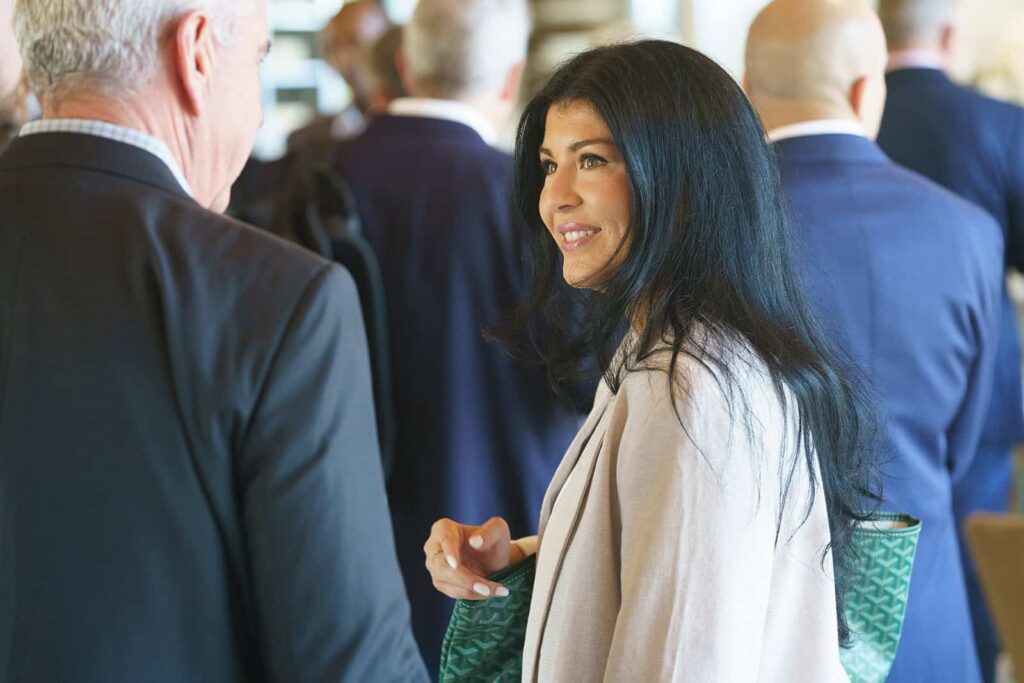
This is what makes civic work different from corporate work, and it’s why a San Francisco civic photographer carries a different responsibility than a commercial one. In corporate photography, the image serves the subject. In civic photography, the image serves the public. The subject is a public servant; the photograph is part of the public record. That distinction changes every choice, such as how a person is lit, how they’re framed, whether they’re posed as an authority or as a neighbor, and whether the final image tells the truth about who they are.
What is civic portraiture, exactly?
Civic portraiture is the documentation of public leadership: the individuals who hold public trust and the institutional moments where that trust is conferred, exercised, or renewed.
It includes more than a headshot on a government webpage. In practice, the work spans:
- Official portraits of commissioners, appointees, board members, and department leadership
- Swearing-in and appointment ceremonies, where a person formally takes on public duty
- Public hearings, board meetings, and community sessions, where governance actually happens
- Civic events and ribbon-cuttings marking public investment in the city
- Nonprofit and community-institution coverage, where civic life extends beyond City Hall
- Archival documentation, images that will outlive the term of office and become the record
Why do leadership portraits matter for public trust?
Because trust is built on legibility, and photography is one of the fastest ways a public institution becomes legible to the people it serves.
Consider the difference between two agency websites. One has current, consistent, well-made portraits of every commissioner, real people, clearly seen, photographed with evident care. The other has a patchwork: a few cropped snapshots, one obviously outdated headshot, two placeholder silhouettes where portraits should be. Nothing in the second site’s text says “this body is inaccessible.” But the impression lands anyway.
Photography communicates institutional seriousness before a single word is read. A well-documented public body signals: we are here, we are accountable, and we are not hiding.
There’s also the matter of the historical record. Terms end, and commissioners rotate. The photograph is what remains, the thing that lets a resident ten years from now see who was in the room when a decision was made. Civic photography is one of the few commercial disciplines whose product is genuinely archival. That deserves to be treated with a documentarian’s care rather than a marketer’s polish.
How is civic photography different from corporate photography?
| Corporate photography | Civic photography | |
|---|---|---|
| Primary audience | Clients, investors, recruits | The general public |
| The image serves | The subject’s brand | The public’s understanding |
| Core goal | Persuade and position | Document and clarify |
| Standard of success | Does it look impressive? | Is it honest, dignified, and clear? |
| Tone | Aspirational, polished | Direct, human, credible |
| Lifespan | Until the next rebrand | The historical record |
| Governing value | Brand consistency | Public trust |
| Consent and permissions | Standard commercial release | Heightened — public setting, public role, institutional protocol |
The most important row in that table is the last one. Civic environments carry protocols that commercial ones don’t: rules about where a photographer may stand during a hearing, when a ceremony may be documented, whose consent is required, and what may be published. Chris Conner Photography has the expertise to make these decisions and produce high-quality civic photography.
What makes a strong civic portrait?
Presence over polish. A civic portrait should look like the person actually looks. Heavy retouching reads as evasion in a context where the whole point is transparency. The public has a finely tuned sense for images that are working too hard.
Clarity over drama. Dramatic light is a corporate flourish. In civic work, the subject should be plainly, generously visible. Someone should be able to look at the image and simply see a person.
Dignity without distance. The hardest balance in the genre. A public official photographed too grandly reads as remote; photographed too casually, they read as unserious. The target is a person who is both credible and reachable — a neighbor who happens to hold responsibility.
Consistency across a body. When an entire commission is photographed in a unified way, the group reads as an institution rather than a collection of individuals. That coherence is itself a signal of a functioning public body.
Context, when it earns its place. A portrait made in the room where the work happens carries information a studio backdrop cannot.
How do civic bodies and nonprofits plan this work?
A practical sequence, for communications staff who own this and rarely have a template:
- Anticipate the appointment cycle. Commission and committee appointments arrive on a predictable rhythm. Schedule portraiture as part of the onboarding process rather than scrambling when a press request lands.
- Photograph the whole body at once when possible. A single session for all members produces the visual consistency that makes an institution look like one.
- Clarify permissions before the shoot, not after. Establish who may be photographed, in what settings, and where images may be published. Get it in writing.
- Document the ceremony, not just the face. Swearing-in and appointment moments are the civic record’s most meaningful images and cannot be recreated.
- Plan for the archive. Specify high-resolution delivery and a usage license that permits press, agency, and public-record use. Civic images have long lives.
- Refresh on a cycle. A portrait that no longer resembles the person undermines the credibility it was meant to build.

Frequently Asked Questions
Q: What does a San Francisco civic photographer do?
A: They document public leadership: official portraits of commissioners, appointees, and department heads; swearing-in and appointment ceremonies; public hearings and board meetings; civic events; and the community institutions that make up public life.
Q: Why does civic portraiture matter for public trust?
A: For most residents, a photograph is their only direct encounter with a public official. Clear, current, dignified portraits make public bodies legible and accountable. Missing or outdated images quietly communicate distance and disorganization, regardless of what the institution actually intends.
Q: How is a civic portrait different from a corporate headshot?
A: A corporate headshot persuades on behalf of the subject. A civic portrait informs on behalf of the public. Civic work prioritizes honesty, clarity, and dignity over polish and aspiration, and it operates under stricter permissions and institutional protocol.
Q: Can civic and government photography be non-partisan?
A: It must be. The work documents offices and institutions, not politics. A photographer serving civic clients is documenting the functioning of public bodies, a role that holds regardless of who occupies a seat or which administration made the appointment.
Q: Who typically hires a San Francisco government photographer?
A: Communications and press staff at city agencies, commissions, and boards; nonprofit and civic organizations; institutional foundations; and public-facing bodies that need portraits, ceremony coverage, and event documentation for press, archives, and public-record use.
Q: What should a civic photography engagement include?
A: Consistent portraiture across the full body, ceremony and event coverage, clarified permissions in writing, high-resolution archival delivery, and a usage license broad enough to cover press, agency, and public-record publication.
About Chris Conner Photography
Chris Conner Photography is a San Francisco photographer specializing in executive, corporate, and branding portraits and nonprofit and civic event photography for the Bay Area’s leaders and organizations, alongside family and milestone photography. Chris is hired when a moment is important and cannot be repeated: by the executives, nonprofits, civic organizations, and families who call him when it counts.
Trusted photography for San Francisco’s leaders, organizations, families, and milestone moments.
Have a question or tip?
Leave a comment below — I personally read and reply to each one!
Comments